Croft History
  • Home
  • Places of Worship
  • Local Families
    • The Yates Family
    • The Clare, Warburton and Daintith Family
  • World War Two
  • Gallery
  • Public Houses
  • News
  • Burial Grounds

History
&
​Heritage

Croft and Chowbent Unitarian Chapels

25/4/2022

 
Croft Unitarian Chapel and Chowbent Unitarian Chapel
In March I finally got to visit Chowbent Unitarian Chapel. It is a remarkable building and full of history.

The reason for my visit was that I think that documents relating to Croft Unitarian Chapel may be there. Documents by John Bulmer written in the early 1970’s say that the documents and registers were there at that time.

The current building dates back 300 years and the congregation even longer. The original chapel used by the congregation was built in 1645 and the current one in 1721.
​
The present chapel retains the only known surviving artefacts from the 1645 building, namely the Communion table and two fine Commonwealth silver communion cups gifted by Robert Mort in 1654. The cups are kept securely in a local vault and are brought to chapel only for special occasions. A nail studded door that separates the chapel from the vestry is also thought to be from the original 1645 chapel.
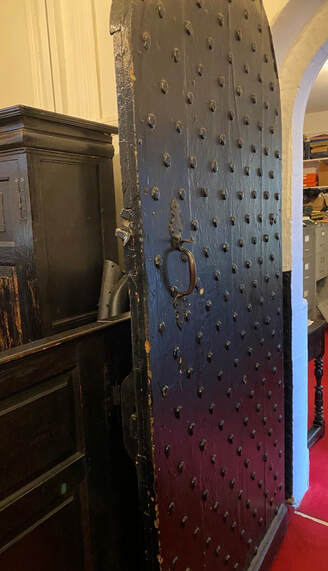
Picture
Studded door at Chowbent, thought to be from the chapel of 1645
More about the chapel and it's history can be read on the
​Chowbent Unitarian Chapel website.
Before I even started looking through the many boxes of historic documents, I was shown a bunch of papers kept in the office of the chapel. These were all related directly to Croft Chapel.
​
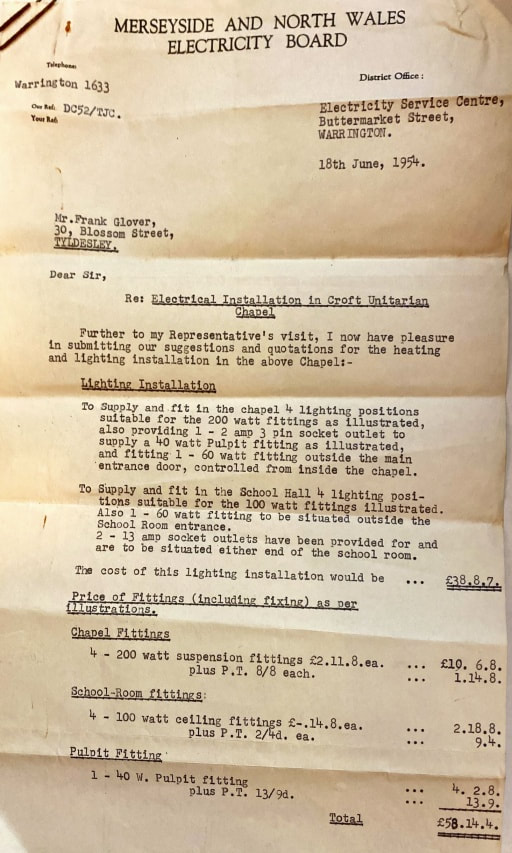
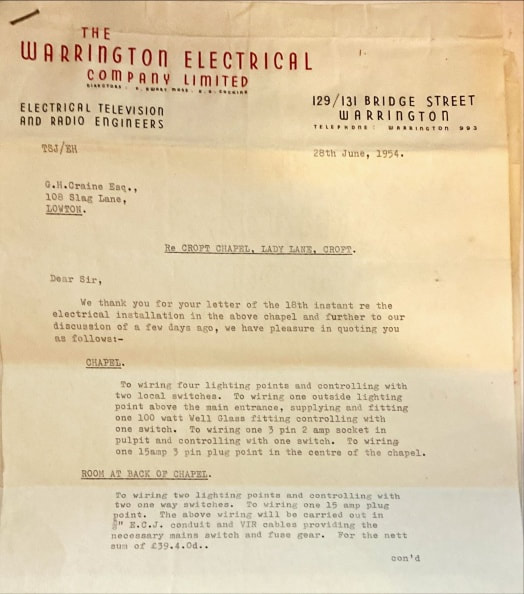
The papers contain handwritten correspondence between Mr. Hatton, Mr. R Goddan, Mr. F Glover and Mr. G Craine regarding the installation of electricity at Croft Unitarian Chapel.
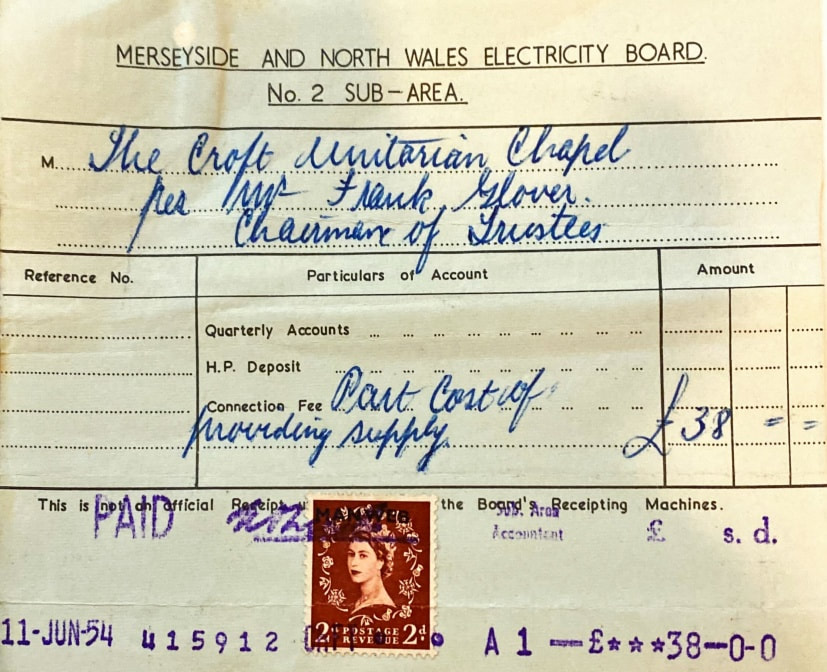
There are quotes for the supply, the installation, and the fittings. There is also a receipt for a cheque for £38 from Croft Chapel Trustees towards the supply fees.
Picture
Quote for electrical installation 18/06/1954
Picture
Quote for electricity 28/06/1954
Picture
Receipt for £38 towards the cost of the electricity supply 11/06/1954
I managed to get through two of the boxes they had at Chowbent, all very interesting and unique items, but no more on Croft.

I didn’t have any more time available to continue searching, but hopefully I will be able to visit again soon and continue the search.
​
I am very grateful to David Shallcross at the Chapel for allowing me to visit and for showing me around.

View more images of
Chowbent Unitarian Chapel

The Story of Winwick Asylum

21/4/2022

 
Picture
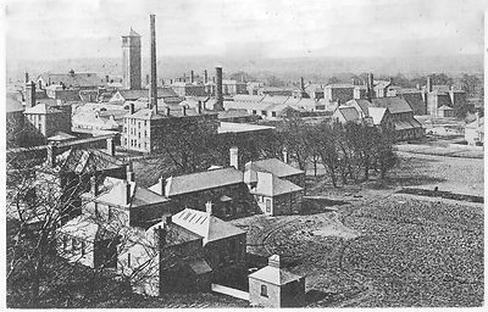
Winwick Asylum from above. Year unknown.
Planning for Winwick Asylum began in 1894. The new institution was to serve the south of the county and be located approximately midway between Rainhill and Prestwich asylums at the Winwick Hall estate which included Delph and Winwick Hall Farms.
 
Construction commenced at Winwick from 1897 and the existing Winwick Hall, built around 1734 and formerly the home of the Rector of Winwick was adapted for use as a home for around 60 imbecile boys.

The home opened on 28th September 1897 and was managed by a master and matron whilst building work progressed on the neighbouring asylum. Delph farm was retained as a dairy farm for the new complex.
There was a three-storey administration hall, visiting rooms, recreation hall, kitchens and yard, steward’s stores and a huge water tower dominating the area for miles.
To the northeast of the complex was located the home of the Superintendent, Hollins House, as well as an isolation hospital for infectious diseases. The Hollins Lane frontage of the estate was provided with 12 cottages for married attendants, with six more added in 1910.

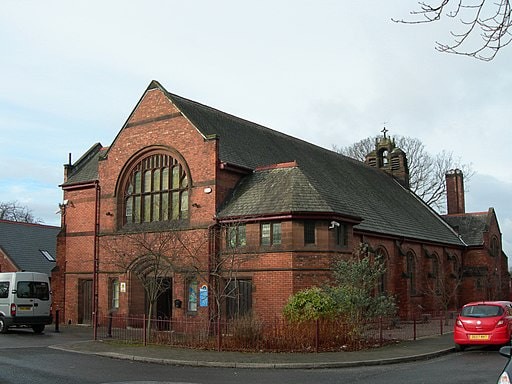
​The service drive was lined by detached staff residences and two chapels, one for Anglicans and the other for Catholic congregations.
Picture
The Roman Catholic Chapel at Winwick Hospital. Photo: Mike Lyne / Winwick Chapel
The new asylum opened on 2nd January 1902 with capacity for 2,050 inmates, initially only those with a chronic illness being admitted. Acute patients were accepted from 29th May 1905.

At this time Winwick Hall was considered no longer fit for use and being prohibitively expensive to repair, was demolished with the imbecile boys relocated to the main building. The site of Winwick Hall was redeveloped as a detached two-storey annexe which also became known as Winwick Hall and opened in 1908.
​
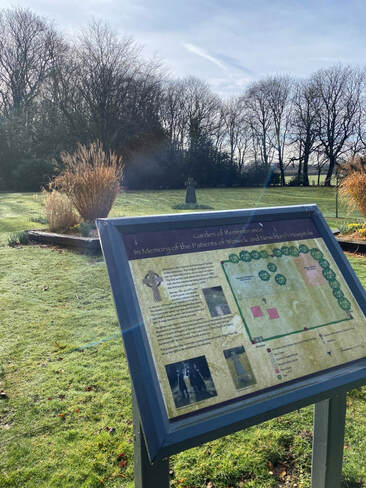
A burial ground was located a short distance to the south of this area for pauper inmates who after death remained unclaimed by their families. 
Picture
The burial ground at Winwick, taken March 2022
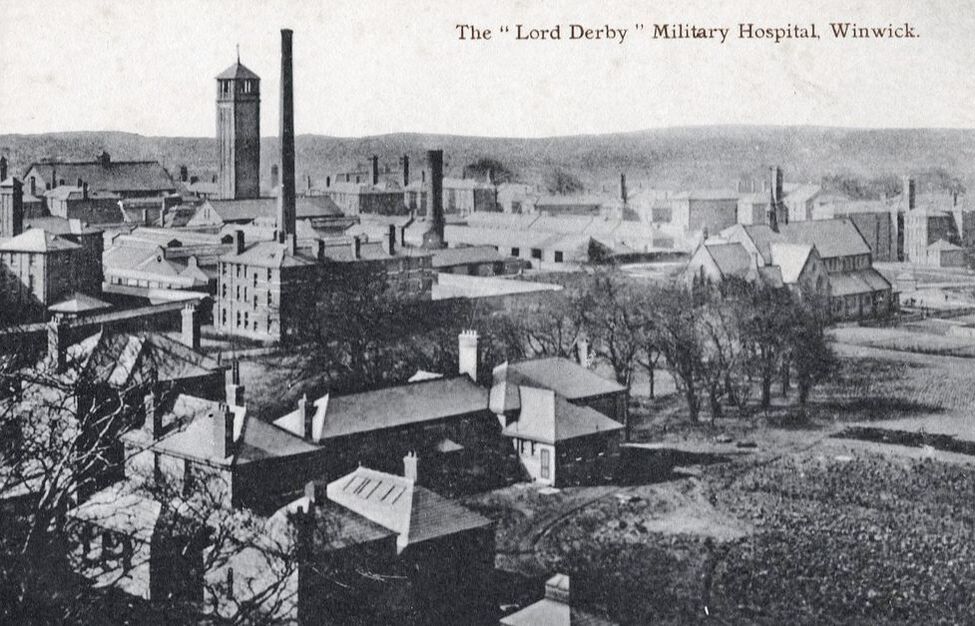
During WWI, Winwick Asylum was used by the military for the treatment of war casualties. The hospital railway siding which ran to the steward’s stores was adapted to accept troops at a temporary wooden platform. Various buildings were modified and an operating theatre developed.

​As the ‘Lord Derby War Hospital’ the building remained under military control from May 1915 until closed in October 1920. In 1921 Winwick reopened and patients were returned from their wartime exile at other hospitals.
Picture
The Lord Derby War Hospital
The Mental Treatment Act of 1930 revised the Lunacy Laws, replacing the term 'asylum' with 'mental hospital', permitting voluntary admission for treatment, and introducing psychiatric out-patient clinics. This marked significant progress for Winwick along with other asylums throughout the country.
 
A site for a new admission and treatment complex was purchased in 1937 and completed during the Second World War in 1940, being requisitioned for use by the US military.
After the war, the admissions hospital, known as Delph Park, was used as a sanatorium for patients suffering from tuberculosis before finally reverting to its’ intended use in the 1960’s.

A day hospital was opened in 1981 as a means of providing an intermediate between hospital and community care and by 1983 the occupancy of the hospital was just over 1,700 patients.
The Isolation hospital was demolished and an industrial therapy unit constructed close to its site.
A substance misuse unit opened in 1986 and an intensive care unit followed in 1990.

By 1994 many of the wards had been closed with just over 350 patients remaining on site and the hospital was sold for development.
​
Closure of the hospital followed in 1997 and it was mostly demolished by 2000.
​The Roman Catholic Chapel, Chaplain’s residence, Hollins Lodge and adjacent staff houses survive. Mental Health services remain on the Winwick Hall site to the north west where the 1908 building remains in use along with modern units.
The hospital burial ground remains and is accessible and maintained although the last patient interment occurred in 1971.

Graves & Burials at Winwick Hospital

Very few of the graves remain in the burial ground today. There are nine visible stones as of March 2022. All stones are the same small rectangular ledger stones, with up to three people buried in each. A separate plaque for each person with name, age and date of death is attached.

​The existing graves can be viewed on find-a-grave. 

There are also images available of a small number of graves which were visible after the hospital closed, but aren't there now. These can be seen at Winwick Remembered.

Memories of Winwick Hospital

I was recently contacted by Tim Mather, who's Grandfather and Great-Grandfather both worked at Winwick.

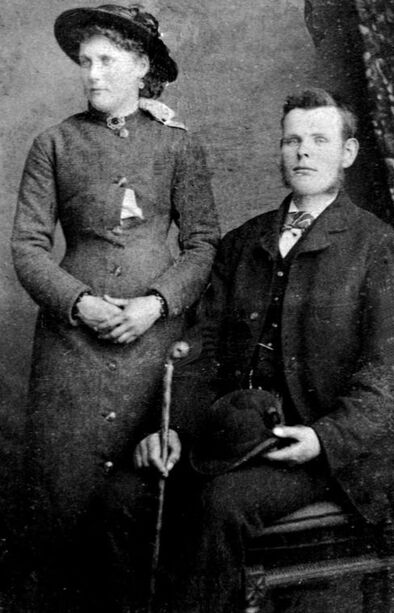
His Great Grandfather William Britch worked at the hospital as an engineer until his death in 1914. William was killed at Winwick Asylum having met with an "accident" on 2nd June 1914. He had been struck over the head from behind with a chamber-pot by a patient. He had been warned never to turn his back on this person but forgot and sustained a fractured skull and died in Warrington Infirmary 3 days after the event on 4th June 1914.
Picture
William Britch and his wife Mary
His Grandfather Fred Miller worked as a male nurse at the hospital until his death in 1965 
Picture
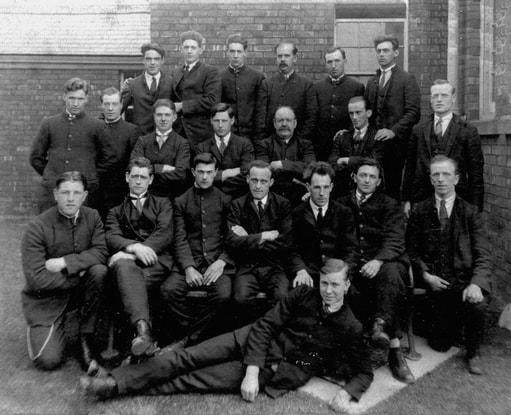
Male nurses at Winwick Hospital. Fred is third from the left on the front row. Possibly taken around 1930.

The Story of John Monks

11/4/2022

 
Picture
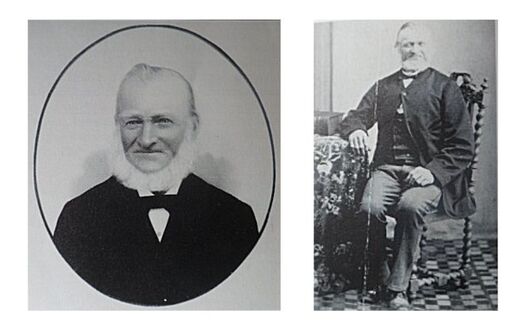
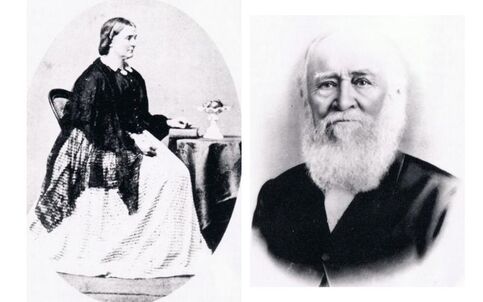
Two images of John Monks, dates unknown
John Monks was born in 1815 to George and Ann Monks at Monk House, Newton-le-Willows. He was baptised at Risley Chapel on 12th February that year.
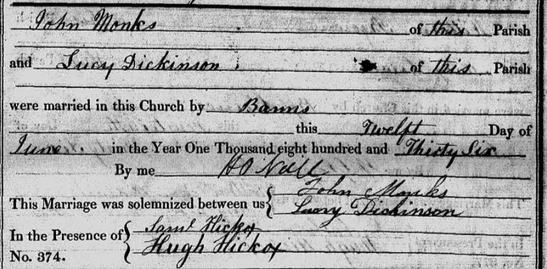
He married Lucy Dickinson on 12th June 1836 at All Saints Church in Wigan. 
Picture
The Register of John and Lucy's Marriage in 1836
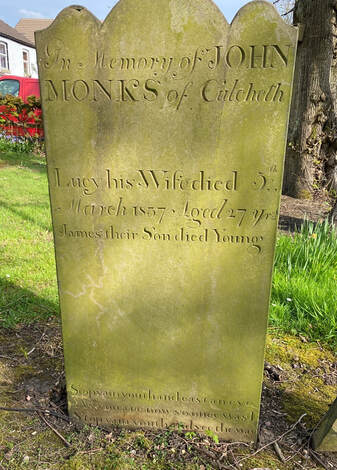
Tragically their son, James died not long after he was born and was buried at Risley on 1st March 1837. Lucy Monks was buried exactly one week later, aged 27.

John was one of the Unitarians ejected from Risley Chapel in 1838 and was involved in the building of Croft Unitarian Chapel.
Gravestone from 1837
The grave of Lucy and James Monks at Risley Chapel
John’s younger sister Alice Monks had married Francis Duffield, who was a home missionary at the Salford church. The couple were leaving for Australia with their son William and John took the opportunity for a new start and decided to join them. They sailed on the ship 'Delhi' from Liverpool, arriving in Australia on 20th December 1839.
Picture
Alice Monks and her husband Francis Duffield, dates unknown
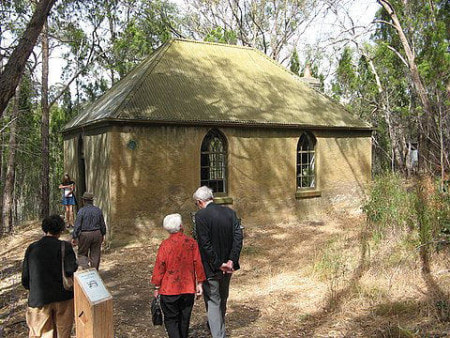
​John vowed that if God prospered him in his new country, he would build a church. He did prosper and built Shady Grove Unitarian School and Church in 1845.
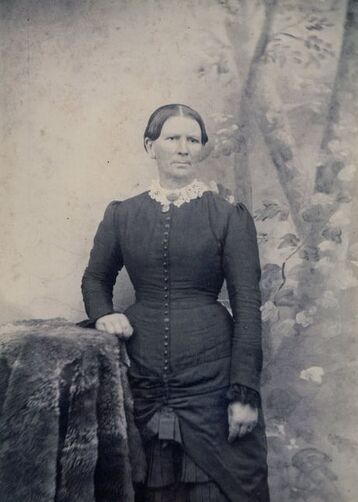
John married Priscilla Appleton (also from Lancashire, sailing in 1839 on a different ship) in 1850 and they had ten children. 
Picture
Priscilla Appleton, date unknown
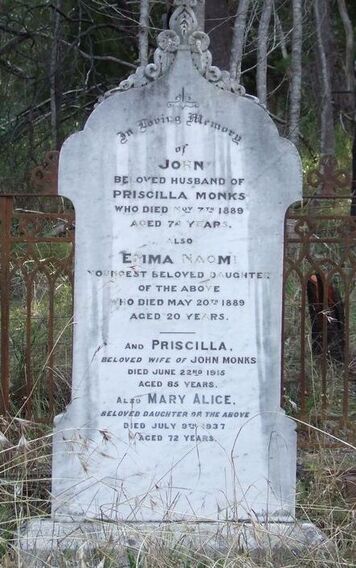
Unfortunately, John and Priscilla were still to suffer some personal hardships. On 24th December 1854, their son John passed away aged just 9 months. In 1863, their daughter Emmeline died, aged 3 years and 10 months. Their youngest daughter Emma passed away aged 20 in May 1889. John himself died in November that year.
They were all buried at the Shady Grove Unitarian Church Cemetery.
​
The church still stands today and is still active. The building is listed with the South Australia Heritage Register.
Picture
Shady Grove Unitarian Church
Picture
The grave of John Monks

Salford Cottage Homes in Culcheth

10/4/2022

 
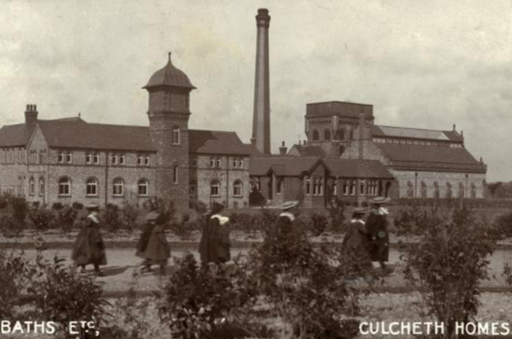
Salford Cottage Homes Culcheth Picture

An Account of the Culcheth Cottage Homes, Written by Rev. Plant in 1928.

The Salford Board (of Guardians) purchased an estate at Culcheth, six miles from Warrington, an unspoiled country district in the healthiest part of South Lancashire in the parish of Newchurch.

The estate, of 46 ¾ statute acres, was purchased in 1899 for £4500. In 1903 the Board erected a group of cottage homes for the accommodation of 288 children and a staff of officers. The building costs were £61, 211 and furnishing an extra £2500.

No pains were spared to make the Colony complete in every way, and the result amply justifies the thoughtful foresight and unselfish labour spent on the project by the members of the Board at that time.

The Colony consists of 22 semi-detached and two detached cottages to accommodate 12 to 14 children in each; a hospital designed in wards to accommodate 32 patients; a detached home for the nursing staff, connected to the hospital by a covered way, and a detached house for the Superintendent.

The object in view when planning this Colony was to provide for the destitute children of Salford – ‘a home away from home’ – a home in the heart of the country, amid ideal surroundings, and away from the overcrowded and often squalid neighbourhood that most of them had known from infancy.
​
The staff and children attend at the Parish Church each Sunday morning at 10:30 a.m., and the rector who is Chaplain of the Homes, prepares them for confirmation, teaches in the day school twice a week, arranges their Sunday School and children’s services, and looks after their spiritual life generally.
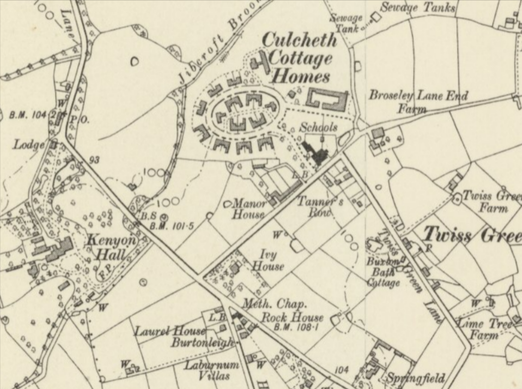
Picture
Map from 1913 showing the Culcheth Cottage Homes
In each home are placed not more than 12 children, whose ages range from 2 – 15 years, in charge of a Foster Mother (and in the case of some boys Home of a Foster Father and Mother). Each child has its own separate bed, its own private locker, and its own private toilet utensils.

Uniformity in the Homes is avoided as much as possible, and the Foster Parents are encouraged to exercise their individuality, and while conforming to the general rules of the Colony, to conduct their Homes naturally and spontaneously.

The children attend school until the age of 14 and during this time have every opportunity of physical training, both by definite instruction, and by organised games – special attention being given to swimming, for which a large and handsome bath has been erected.

When a child passes 14 it leaves school, and while remaining in the Colony spends its school hours in one or other of the industrial shops, each of which is under the control of an experienced tradesman or tradeswoman, and where it receives careful tuition, and acquires practical knowledge.

For the girls there are provided a sewing room, well-equipped for all dressmaking, and which supplies the Colony with most of its garments, linen and hosiery, a laundry that affords training in the use of machinery, and in all branches of laundry work, and in addition the Homes themselves furnish tuition in cooking and all domestic duties.

The boys have the choice of the Shoemaker’s Shop, in which all the boot repairs are executed, and a large proportion of new work is undertaken, The Joiner’s shop, in which all renewals of, and repairs to woodwork for the Homes are made; the Bakehouse which supplies the Colony with its bread and cake, the Plumber’s and Engineer’s shop, which provides the Colony with electric light and with water and heat; the Painter’s shop, which is responsible for all decoration and re-glazing on the Colony. Gardening is taught to both boys and girls.

In addition, every boy has the opportunity of joining the brass band.
The numerous centres of activity, together with the large mixed farm, makes the Colony practically self-contained, and it is a rare occurrence to see any outside tradesmen at work in the grounds.
​
The value of the training is shown when the children leave the Homes, and almost without exception they do well and make headway.

Newchurch Hospital

The Homes as an orphanage closed about ten years after this was written and became Newchurch Hospital in 1948.

In 1989, there were concerns for the future of the hospital:

Newchurch Hospital, Culcheth
HC Deb 23 March 1989 

Mr Hoyle - To ask the Secretary of State for Health what is the future of Newchurch hospital, Culcheth, Warrington; and if there are any plans to close it.

Mr. Freeman - Newchurch hospital is in the process of retraction as patients are gradually transferred to care in the community schemes. As the numbers of patients reduces consideration will have to be given to the best way of caring for those remaining. We are not, however, aware of any plans to close Newchurch hospital.
(Source: parliament.uk)

The Workhouse Encyclopedia by Peter Higginbotham has the dates that  Newchurch Hospital operated as 1948 - 1992.

Former staff member Helena Campbell has contacted me with the correct closure date of March 1993. 
​
The site was designated a protected conservation area in 1993. In 1995, permission was granted for conversion of the buildings into private dwellings.

Croft Then and Now: Orford House

6/4/2022


Orford House Auction in 1906

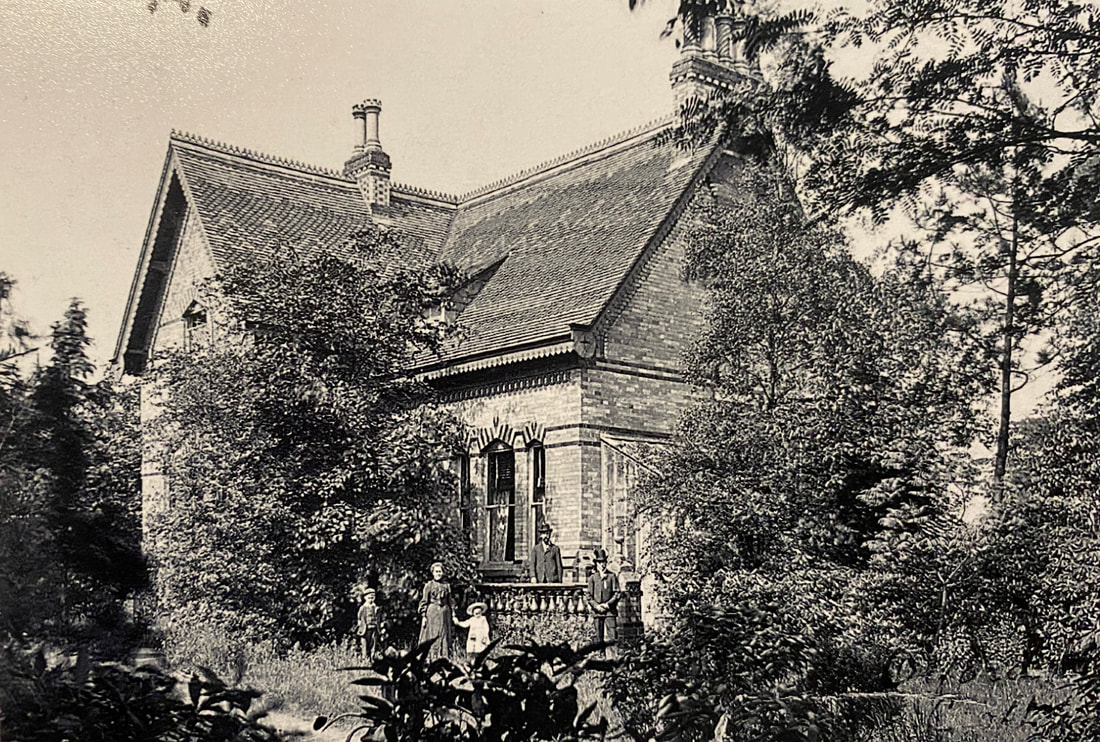
Mono orford house, croft
Orford House, probably taken between 1900 and 1910.
Friday 27th July 1906
Wigan Observer and District Advertiser

BY ORDER OF TRUSTEES.
CROFT, NEAR WARRINGTON.
VALUABLE FREEHOLD RESIDENCE & GARDENS
DETACHED DWELLING-HOUSE, AND
AGRICULTURAL & BUILDING LAND FOR SALE.
MR. GEORGE WILCOCK will SELL BY AUCTION at the KENYON JUNCTION HOTEL, KENYON JUNCTION, on Wednesday, the 1st August, 1906, at 5 for 6pm., subject to the general and special conditions to be then and there produced: -

LOT 1. – All that Detached RESIDENCE, situate in Lady Lane, croft, near Warrington, called ‘Orford House’, with the Outbuildings, Gardens, and Five Fields adjoining thereto. This Lot has a frontage to Lady Lane of about 196 yards, and an area of about 13a.3r.2p. statute measure.
​
Orford House is substantially built, and contains entrance hall, two entertaining rooms, kitchen, pantry, scullery, larder and wash-house, five bedrooms and bathroom, and a small conservatory and potting house. The Outbuildings consist of brick-built and slated barn, shippon, fodder bing, two-stall stable, all with hay lofts over; granary, coach house, card shed and fowl house, with store rooms over hay and implement shed and piggeries, all in good repair. There are three large Cisterns for storing rain water, and the house is supplied from the Corporation mains. The pleasure grounds are planted with well grown and ornamental trees and shrubs. There are also an orchard, kitchen garden, and plantations, all walled or fenced in. Vacant possession of the house and gardens, but not of the fields and farm buildings, can be given on completion.

Orford House Sale in 2016

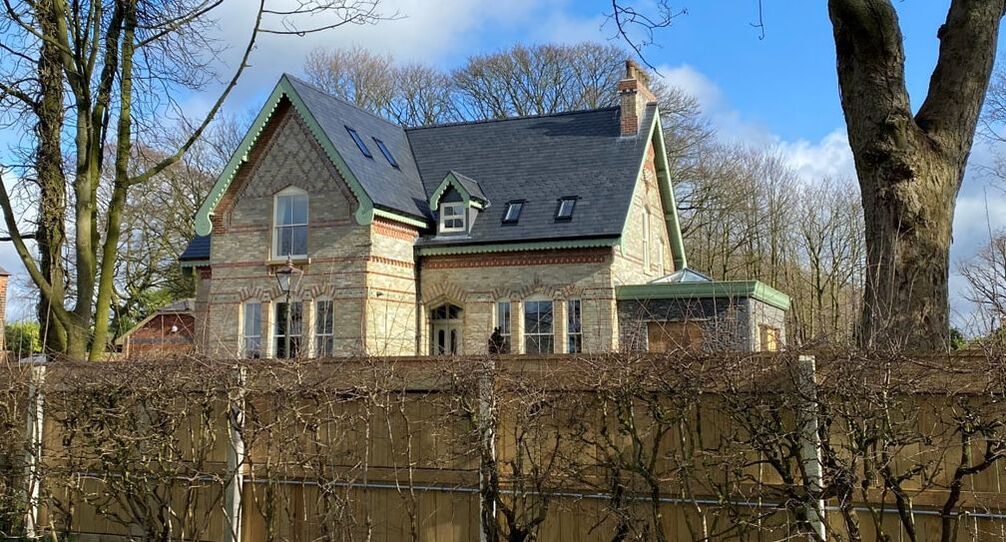
Picture
Orford House, taken in 2022
Orford House is an amazing Victorian detached family home with five bedrooms offering for sale a wealth of character with original features retained.

This is a stunning property has high ceilings, cast iron open fires and original tiled floors. The rooms are spacious and offer hallway to the main lounge and leading to separate sunny conservatory. Formal dining area, morning room with open fire and access to the kitchen, downstairs four-piece shower room, a useful utility room and a pantry. To the first floor there are five double bedrooms and a generous size bathroom.

The property is private and stands on a fantastic plot hidden off the main road which gives you the feeling of tranquillity. There is a driveway approach leading to a detached double garage. Ornamental pond and enclosed boundaries. Laid to lawn with an extensive range of plants, flowers and shrub borders.

The Story of Enoch William Sankey

4/4/2022

 
Picture
​Enoch William Sankey was born in Croft in February 1856 to Enoch and Eliza Sankey (nee Dootson).
He grew up at Heath Farm with his parents and his older half-brother, Reginald Owen.

In 1872 he set up business at Heath Farm, with £500 cash from his mother. He then received around £6 – 7,000 in capital from his father’s estate, as well as the General Elliot Hotel, a cottage and more land.

He married Mary Ann Millner on September 13th 1881, at Christ Church in Croft. They had eight children together, Annie, Gwendoline, Ernest , Sydney, Dorothy, Margaret, Lilian and Charles.

In 1892 Enoch purchased Heath Farm and it’s land, as well as Eaves Brow Farm, Croft and Cross Lane Farm, Culcheth for £7038. He also acquired New Hay Farm for £4200.
He continued in business as a farmer and was “one of the best known horse dealers in the North of England”.  He was a member of the Southworth with Croft School Board for a number of years.
He carried out extensive business across the country and made large profits.
Enoch lived an extravagant life involving frequent travelling abroad, motor cars and racing trips and was a well-known and much liked gentleman.

In 1911 his unsecured debts were £12878 and his free assets just £900. He was subject to a bankruptcy hearing in July 1912 at Warrington, which ran through to October.

He stayed at Heath Farm after bankruptcy and even continued in horse dealing, as he was summoned to court for a contravention of the Defence of the Realm Act in 1918 after selling a horse without a licence earlier that year.


There is little information available after 1918, but it seems that the family moved to Sale as he passed away there on 2nd November 1928 and was cremated at Manchester Crematorium.
A huge thank you to Bryan Gladstone, who sent me the below image and inspired me to look into Enoch's story. Brian is the grandson of Ernest Sankey, Enoch's son.

The Sankey Family at Heath Farm

Picture
The Sankey Family outside Heath Farm in around 1905.
LEFT TO RIGHT
BACK ROW: SIDNEY, ENOCH, ANNIE, REGINALD OWEN (ENOCH'S HALF BROTHER), ANNIE OWEN (DAUGHTER OF REGINALD), THOMAS PARK (SON-IN-LAW OF REGINALD)
​FRONT ROW: ERNEST, REGINALD SANKEY OWEN (SON OF REGINALD), FANNY LEES (DAUGHTER-IN-LAW OF REGINALD), MARY ANN (HOLDING MARGARET), GWENDOLINE, LILIAN, DOROTHY

    Author

    Cheyvonne Bower
    I am a local  and family historian with a passion for the past.
    I am a member of the
    ​Manchester & Lancashire Family History Society.

    Archives

    September 2025
    August 2025
    October 2024
    September 2024
    August 2024
    July 2024
    June 2024
    April 2024
    March 2024
    February 2024
    January 2024
    November 2023
    August 2023
    April 2023
    March 2023
    December 2022
    November 2022
    October 2022
    September 2022
    August 2022
    May 2022
    April 2022
    March 2022
    February 2022
    January 2022

    Categories

    All
    Christ Church
    Civil War
    Crime And Punishment
    Croft In The News
    Croft In The Wars
    Croft Then And Now
    Croft Unitarian Chapel
    Culcheth
    Health
    Information
    Irlam
    Leisure
    Listed Buildings
    Maps
    Newspapers
    On This Day
    People
    Public Houses
    Risley Chapel
    Winwick

Picture
© Cheyvonne Bower 2025
  • Home
  • Places of Worship
  • Local Families
    • The Yates Family
    • The Clare, Warburton and Daintith Family
  • World War Two
  • Gallery
  • Public Houses
  • News
  • Burial Grounds